Key Takeaways
While specific emollient wash products exist, most emollients can be used as a soap substitute (except white soft paraffin alone). The main difference between emollient washes and regular leave-on emollients is that the washes are typically more runny. They may also contain a foaming agent so that they act more like regular washing products.
Emollient bath additives are also available to buy. These are added to the bath water and work by creating a layer of oils over the surface of the bath water. These oils coat the surface of the skin as you bathe with the aim of preventing water evaporating from the skin surface. However, a recent study has shown no additional benefit of using bath additives in the treatment of childhood eczema1.
If your child has not been prescribed an emollient wash, use your regular leave-on emollient in the first instance. Many leave-on emollients are designed to be 2 in 1 (or even 3 in 1) products. The 2 in 1 products are typically creams or lotions and can be used as a regular cream or for washing. The 3 in 1 products are usually ointments and can be used as a bath additive as well as for washing and as a leave on treatment. You can read more about the different types of emollients here.
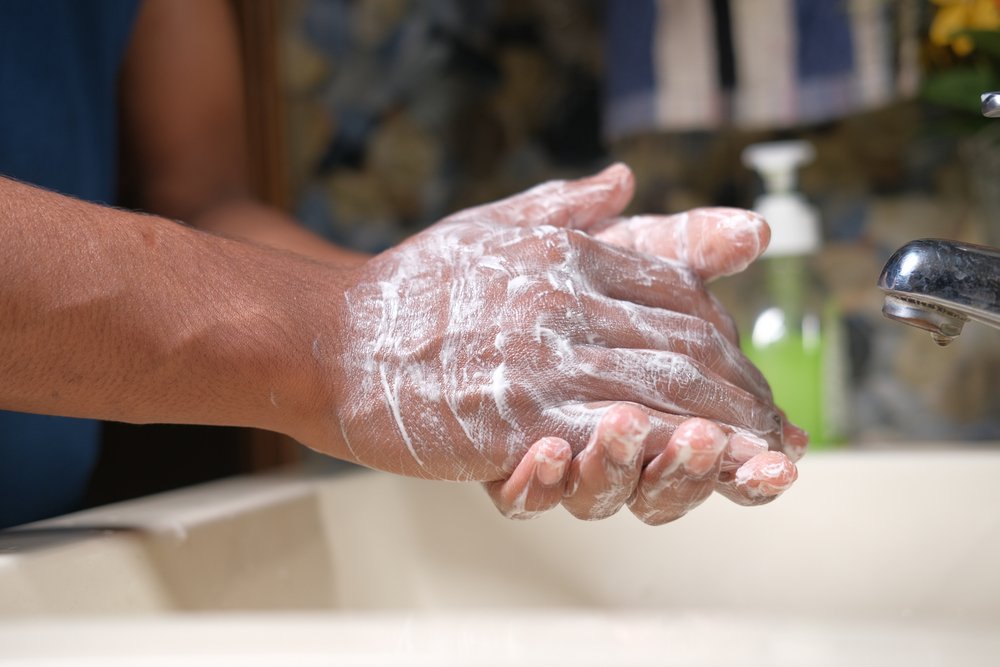
These can be used just like you’d use regular washing products. Squirt a teaspoon sized dollop onto your hand or a flannel and away you go.
There are two ways to wash using emollient creams. You can squirt a teaspoon sized dollop onto your palm, dilute a little warm water, rub it between your palms to mix and then use as you would a regular washing product. Alternatively, you apply a layer of emollient to your child’s whole body before they get into the tub or shower then wash it off. This method is particularly useful for older toddlers and children who find that the water stings when it touches their eczema and can get into the tub or shower by themselves. Obviously, it’s not so great for smaller children who need lifting in the bath.
Ointments are a lot stiffer than creams and need to be diluted with warm water and worked between the palms before you can smear them over the skin. Again, take a teaspoon sized scoop mix with warm water until it is gloopy enough to use as a regular body wash.
If you struggle with using your regular emollient for washing, it’s worth asking your GP to prescribe a washing emollient. Be ready to describe the problems that you are having, so that they can prescribe something appropriate. Often GPs will only prescribe one emollient in the first instance as it is typically cheaper. However the prescribing guidelines are clear that emollients should be acceptable to the patient (and, by extension, their carers).
Emollients are effective cleansers, think of creamy make-up removers, for everyday use. However, they only have limited effectiveness when it comes to killing germs and viruses, so you will need to use regular soap when hand hygiene is important. Find a soap that minimises the skin aggravation and moisturise afterwards.
As children get older, you may need to start using an eczema friendly body wash for the armpits, feet and groin area. They can carry on using emollients on the rest of their bodies for as long as they need to.
If your child has persistent issues with skin infections, it would be worth asking your GP for an emollient containing an anti-bacterial ingredient for both washing and leave-on applications.
As emollients don’t effectively kill germs in the same way as regular soaps and detergents, it’s important to use a clean flannel every time. Without the effect of soap, damp flannels become a microbe breeding ground.
Bath toys are likely to get coated with emollients. A regular trip through the dishwasher or scrub in very hot water and washing up liquid should solve the problem. Dunking them in sterilising fluid will minimise any bacteria or mould build-up (be sure to check the inside of any hollow rubber ducks is mould free as well).
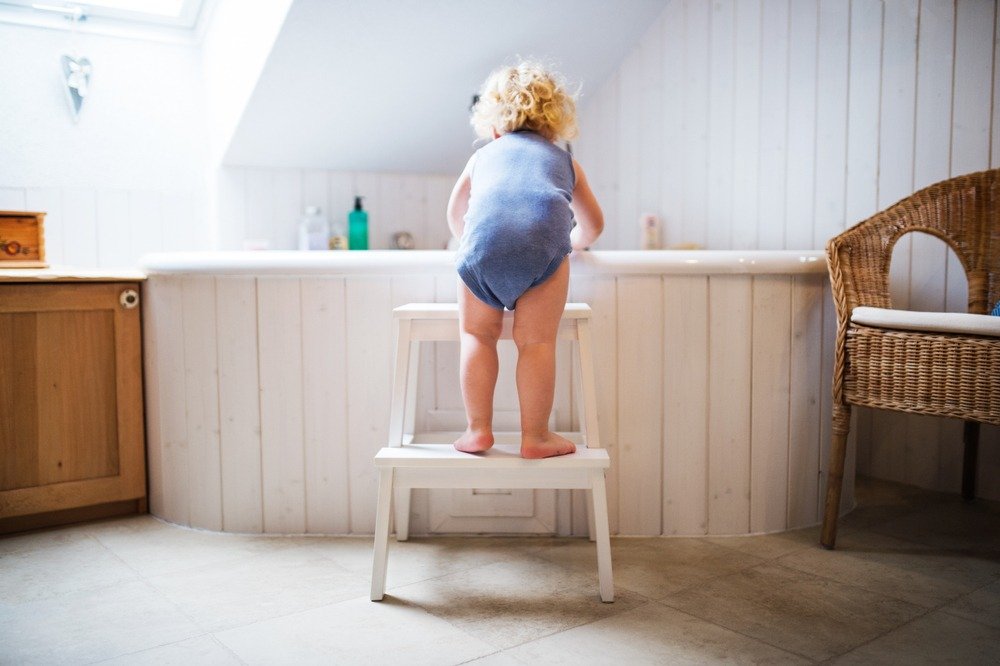
Emollients are oily and will make the bath or shower very slippery for both your child and the next person to use the bathroom. Non-slip bath mats both the tub/shower and on the floor are must when washing with emollients. If you are lifting your child out of the tub, be sure to have washed off as much emollient as possible (from both your child and your hands) and have a very firm grip before you start lifting.
Cleaning surfaces with washing up liquid, very hot water and a soft cloth or sponge will remove the residues and help to keep your drains clear. Rinse well to remove the detergent residues before your child uses the bath again.
Emollient build-ups in drains can be a problem, especially if you are using ointments or live in an older house with outside waste pipes (the water cools more quickly and the emollients go hard again before they reach the sewer). Soda crystals washed down with boiling water are a cheap and effective solution.
When the hair is very short and fine, emollients can be used instead of shampoo. However, as hair gets longer and thicker, you may need to switch to an eczema friendly shampoo. Be wary of shampoo marketed as ‘gentle’ as this usually means that they contain cocamidopropyl betaine, which is kind to eyes but is also known to aggravate eczema in some people. Other possible irritants to watch out for include sodium lauryl sulphate (SLS), any of the parabens and methylchloroisothiazolinone (MCI) or methylisothiazolinone (MI). We use either the Green People or Faith in Nature ranges.
Try to keep the shampoo foam away from your child’s skin as far as possible. If you are washing their hair in the bath, do it last and rinse off your child with fresh water before they get out. If you are using a shower, try not to let the foam run over their body. Wash their hair first so they have plenty of time to rinse off any remaining foam. For older children, it can be better to wash their hair over the sink or bath tub. There are lots of fun shampoo shields that will keep the worst of the bubbles away from the face and neck.
Here at ScratchSleeves, we don’t just write about our lived eczema experiences. We also sell our unique range of scratch mitts and sleepwear. Click here or see below to visit our webshop.
Santer, M, et al. “Emollient Bath Additives for the Treatment of Childhood Eczema (Bathe): Multicentre Pragmatic Parallel Group Randomised Controlled Trial of Clinical and Cost Effectiveness.” British Medical Journal (Clinical Research Ed.), U.S. National Library of Medicine, May 2018, pubmed.ncbi.nlm.nih.gov/29724749/.
The Calm Skin Guide
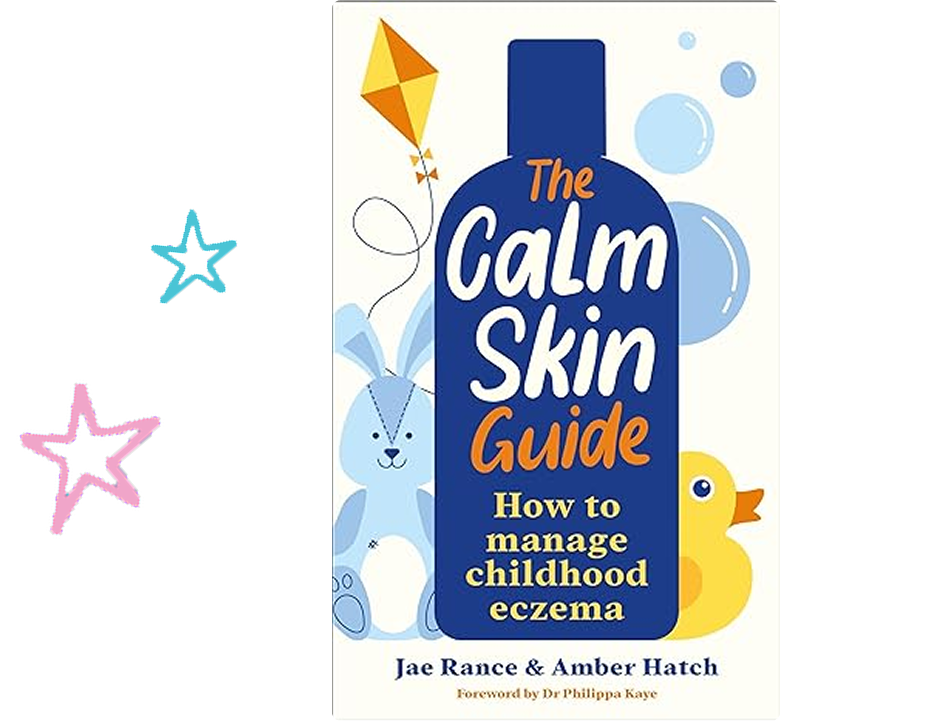
Our guide gives parents the knowledge and tools to manage the condition, from understanding treatments to identifying triggers at home.
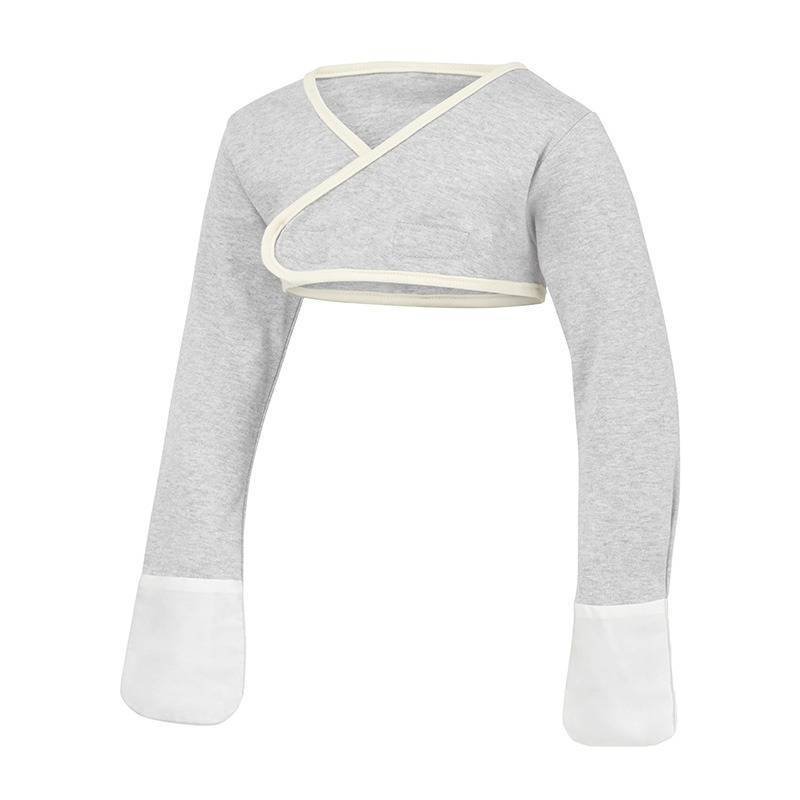
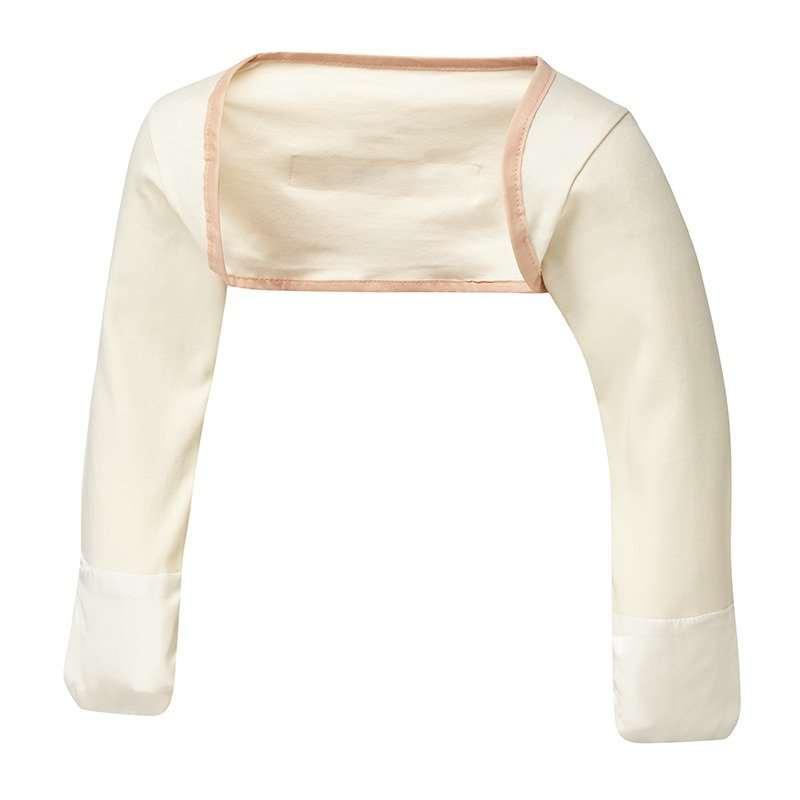
As well as sharing our experience of bringing up an eczema child (and favourite allergy-friendly recipes), we also manufacture and sell our unique stay-on scratch mitts and PJs for itchy babies, toddlers and children. We now stock sizes from 0-adult years in a range of colours and designs.
Perfect for wrigglers


Original Cream

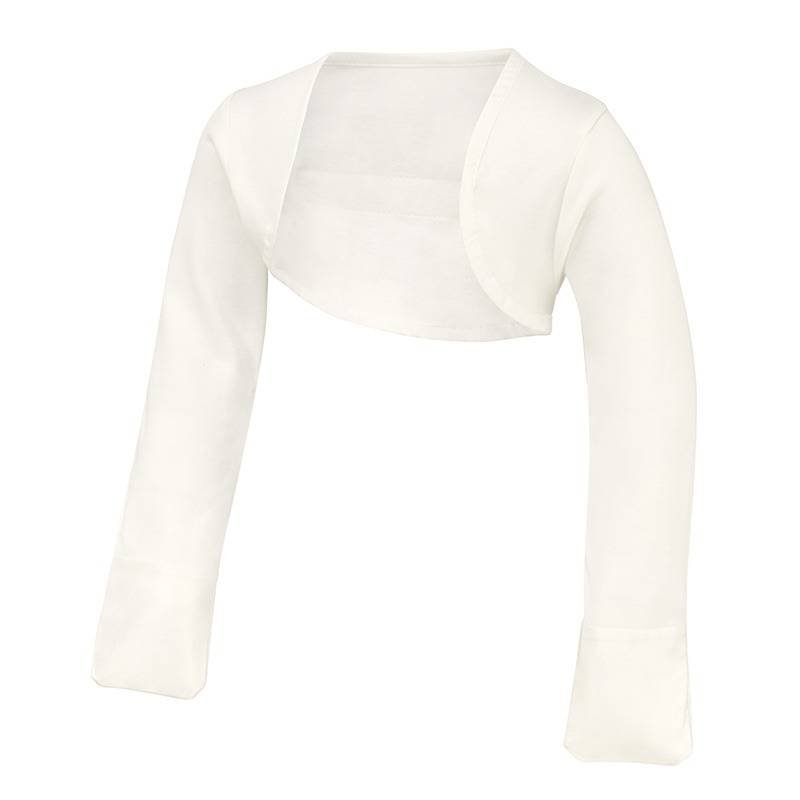
SuperSensitive

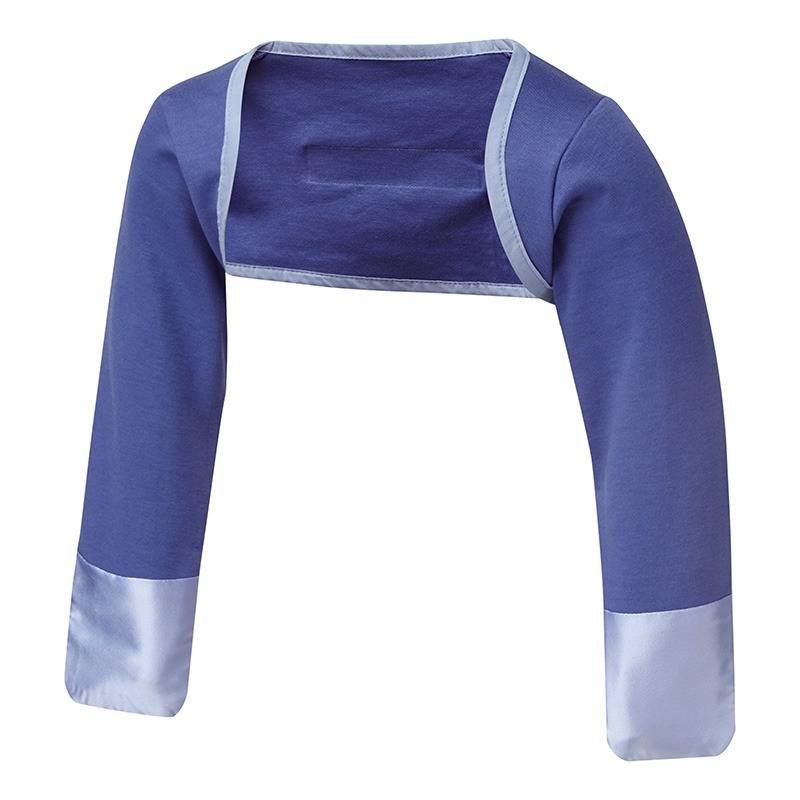
Special Edition


Perfect for wrigglers
Original Cream
SuperSensitive
Special Edition