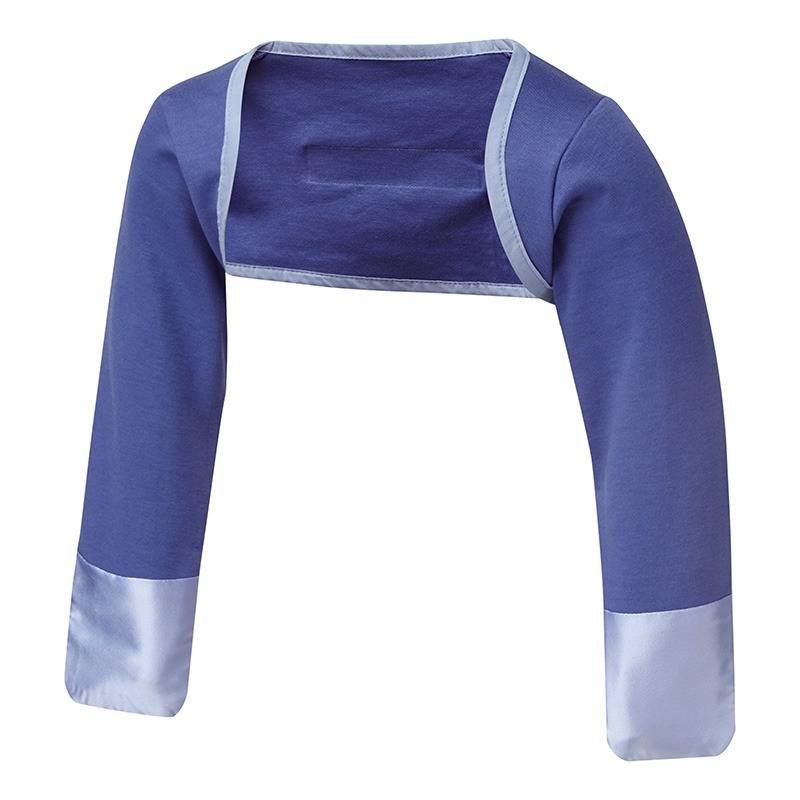
Summer: the time when all kids (not just the itchy ones) get covered from top to toe in white gloop! The sun is really important in the creation of essential Vitamin D, but it also emits harmful UV rays and dries out the skin. With the skin’s moisture gone, eczema is more prone to flare up and the inevitable scratching can open up old (or new!) wounds. Sunscreen can be a convenient way to restore skin moisture at the same time as protecting your child from the sun. However, harsh chemical ingredients could make the situation itchier. We share our sunscreen tips for eczema children, including a guide to understanding the label on your sunscreen.
- Sun screens use two types of ingredients to stop the sun getting to the skin: chemical or mineral sun blocks. Mineral sun block ingredients are typically kinder on eczema skin.
- Test new sunscreens in a small area for 24 hours before using them on the whole body. It is important that the tested area is exposed to the sun because chemical sun block ingredients break down into other chemicals that can irritate sensitive skin.
- Apply emollient at least 30 minutes before you apply any sunscreen. This will minimise any diluting effort of the emollient on the sunscreen. Try to avoid reapplying sunscreen when you are on a sandy beach. Having a sand/sunscreen mix rubbed into delicate, eczema-prone skin can really hurt!
- Don’t rely on sunscreen. Avoid the sun during the heat of the day, use brimmed hats and UV blocking clothing as well. Babies should be kept out of the sun.
Types of sunscreen (and what they mean for eczema)
Some minerals such as zinc oxide or titanium dioxide, act as a physical sunblock. They reflect UV rays so that they aren’t able to penetrate the skin. Sunscreens can be made by adding these mineral powders to a cream. In the past, these sunscreens left the characteristic white sheen to the wearers but modern processing has been able to reduce the particle sizes so that now they are not nearly as obvious.
Sunscreens can also contain organic chemicals, with names such as avobenzone or oxybenzone. Instead of physically deflecting UV light, these molecules absorb UV radiation through their chemical bonds. As the bonds absorb UV radiation, the components of the sunscreen slowly break down and release heat.
The key difference between mineral and chemical sunscreens is that chemical sunscreens are absorbed into the skin whilst those containing minerals sit on the skin and act as a barrier. The mineral formulations often work better for eczema kids as the active ingredient aren’t absorbed into the skin. This means that they have less opportunity to irritate. In addition, the mineral formulation reflects the light rather than converting it into heat. As a result they are often much more comfortable for children whose eczema is aggravated by heat. The vast majority of sunscreens for children have either chemical or combination formulations. However, it is possible to find mineral-only sunscreens.
Which is best for eczema kids: Mineral or chemical sunscreen?
For school-going children, mineral sunscreens have the advantage that they don’t need to be reapplied as frequently. This is because the mineral particles don’t break down in the same way as the chemical-based sunscreens. As result you can apply them at the beginning of the school day and be reasonably confident that your child will be protected throughout the day. The downside of mineral-based sunscreen is that they can leave their trademark white sheen on the skin. Personally, I find this really useful it highlights the bits I‘ve missed on my wriggly and impatient offspring. The kids are not so convinced.
As with all things eczema, what works for one person may not work for the next. It’s worth patch testing new sunscreens in a small area for 24 hours before using them on the whole body. If you are using a chemical or combination formula make sure that the area you test is exposed to light so that the chemical sunscreen ingredients are broken down and you can be sure that your little one is not allergic to the by-products of the light to heat reaction.
Things to watch out for when applying sunscreen on eczema-prone skin
- Try to apply emollient at least 30 minutes before you apply any sunscreen. This will minimise the drying effect of the sun without diluting the sunscreen.
- Avoid going out in the sun immediately after applying emollient. This is because any oily residue can make the skin more susceptible to burning.
- Avoid thick and greasy sunscreen because too much oil can feel really uncomfortable and itchy. Sunscreen with a creamier, thinner texture usually bodes well for eczema children because it is easy to rub in and doesn’t leave too much excess oil on the skin.
- Avoid fragranced sunscreen for eczema children, as the fragrance additives can be irritating
- If you can, avoid applying sunscreen anywhere it could get mixed in with sand. Having a sand/sunscreen mix rubbed into delicate, eczema-prone skin can really hurt! Consider investing in a UV sun-suit or wetsuit for your eczema child if you’re planning a beach holiday.
- If you are using a chemical or combination sunscreen for the first time – keep an eye on your child’s skin for any reactions to new chemicals forming as the light-absorbing chemicals break down.
Other sun protection solutions for eczema children
No one wants to deny their child the right to play in the sun. But as well as sunscreen, you should take extra precautions with your child when out in the heat:
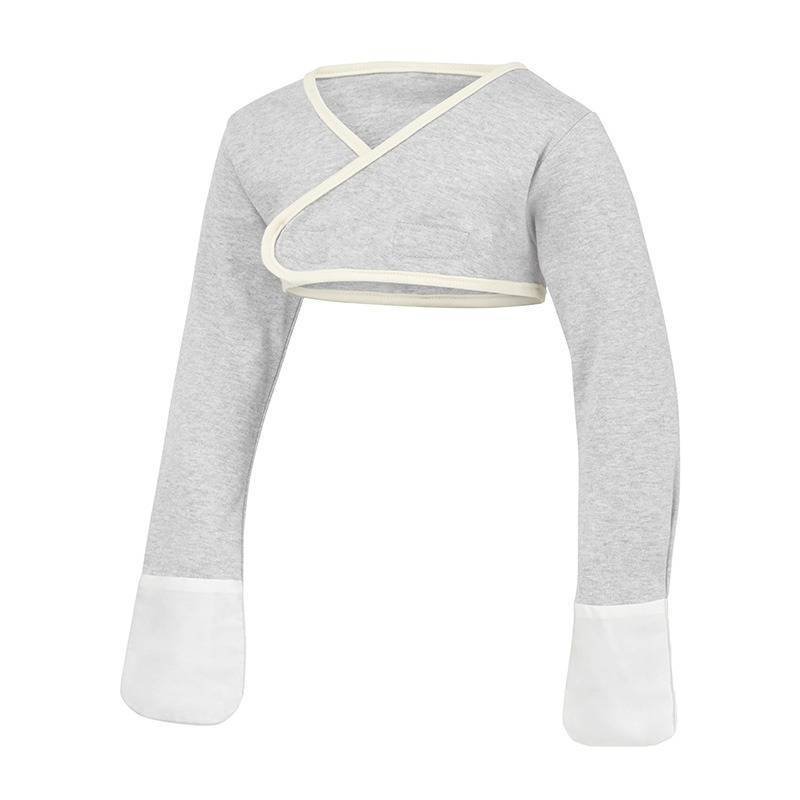
- Make sure your child wears a hat to prevent sunburn on the scalp and dreaded sunstroke. Consider buying a UV sun-suit to minimise the need for sunscreen.
- Dress them in light and loose clothing
- Avoid the sun at peak hours (usually around late morning to late afternoon)
Understanding the label and ingredients on your sunscreen lotion
One look at the ingredients list on any sunscreen is enough to have even the most diligent label checker throwing up their hands in despair. So many unfamiliar chemicals with long, unpronounceable names! And to make things even more complicated most of those chemicals can be known by 2 or 3 different names. We’ve divided the most common sunscreen ingredients into those with a low risk of skin irritation and those known to cause problems more frequently. That said, as with everything eczema, even the low-risk chemicals can cause problems for some people. However, if you steer clear of the higher-risk ingredients you’ve got a good chance of avoiding sunscreens that could irritate your eczema child’s skin.
Low risk sunscreen ingredients
- Titanium dioxide – this is very effective for sun protection as they are physical UV ray blockers that reflect the light away from the surface of the skin. It also has a low allergy risk.
- Zinc oxide – this works in the same way as titanium dioxide. It will protect you from the sun and negative reactions are low.
- Salicylates – these are chemical sunscreens in the UVB range with such as good safety record that they are used as a standard for determining sun protection factors. Allergic contact dermatitis from salicylates has been reported only rarely.
- Avobenzone – also known as 4-tert-butyl-4′-methoxy-dibenzoylmethane or Parsol 1789, is a broad spectrum chemical sunscreen which is especially good for the UVA range. Although there have been reports of allergic reactions they are rare.
- Cinnamates (cinoxate, octinoxate and anything ending -cinnamate) – these are natural chemical sunscreen ingredients derived from cinnamon. While they can cause skin irritation in some people, these reactions are thought to be relatively rare.
- Octocrylene – this is a relatively new chemical sunscreen ingredient which is very similar to cinnamates. While skin irritation has been reported, many of these cases are thought to be related to previous sensitisation following exposure to similar (now banned) chemical. Current thinking is that this chemical is low risk for eczema sufferers but data is still fairly limited.
Common sunscreen ingredients that can aggravate eczema
- Benzophenones – also known as oxybenzone, Eusolex 4360, methanone, Uvinal M40, diphenylketone and any other chemical name ending with ‘-benzophenone’ . These chemicals are great for protection against UV rays but the sun converts them into smaller chemicals that can irritate the skin and cause allergic reactions. These chemicals are the most common cause of allergies to modern sunscreens.
- Parabens – listed as methylparaben (E218), ethylparaben (E214), propylparaben (E216), butylparaben or heptylparaben (E209) and any other chemical name ending in -paraben. These preservatives can trigger eczema flare-ups and are found in many mainstream brands of sunscreen.
- MCI/MI (methylchloroisothiazolinone/methylisothiazolinone) – these are the cosmetic preservatives that hit the news around 5 years ago. They have been linked with such a large increase in eczema and dermatitis that the EU has announced its intention to restrict their use and many cosmetics companies are already reformulating their products to reduce or exclude them.
- Methyldibromoglutaronitrile – yet another snappily named preservative that has been shown to cause allergic reactions, especially in eczema sufferers. This chemical has now been banned for ‘stay-on’ products in the EU but is still used in other parts of the world.
Want to know more about sunscreen allergies? This article from Medscape is a really good place to start.
Tried and tested for 2025: Sunscreens for eczema kids
Sunscreens are expensive and with so many options it’s tricky to know where to spend your money. To make your life easier, we’ve rounded up a selection of the well-known, readily available sunscreens designed for children with sensitive skin and asked our itchy kids what they think of them. To keep the comparisons fair, we’ve only tested creams. Most of these brands have sprays and roll-on versions available but these will necessarily have slightly different formulations to the lotions tested here. We’ve included RRP comparisons, but it’s often possible to find substantial discounts both online and instore.
Avene Suncare Lotion For Children SPF50+

- Chemical sunscreen using Avène’s exclusive SunSitive® Complex which gives broad UVA-UVB sun protection
- Light consistency. Spreads easily and dries quickly with little or no white residue.
- No itching or claggy feel once on. Contains Pre-Tocopheryl, a vitamin E derived antioxidant to minimise sun damage.
- Long lasting and water resistant, we generally forget to reapply during the day and have yet to burn.
- Free from parabens, MCI/MI, phthalates, petrochemicals, lanolin, perfumes and colours. Contains propylene glycol which can irritate the skin in some individuals.
- RRP: £12.50/100ml
- Amazon rating 4.6 stars. Order from Amazon here.
We say: This is the only sunscreen that our touch sensitive daughter will tolerate and it’s available on the High Street in Boots. What’s not to like?
Green People Kids Sun Lotion SPF30
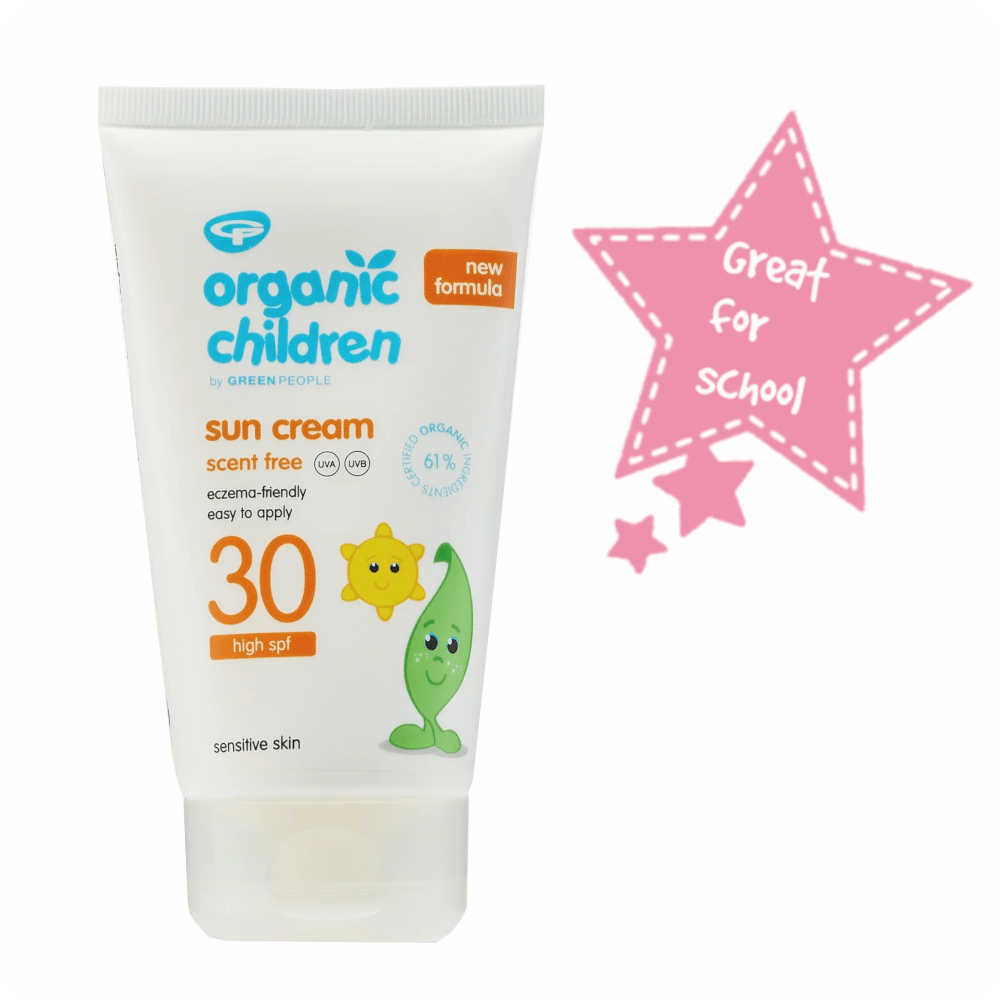
- Combination mineral and chemical sunscreen formula. Active ingredients are cinnamates and titanium oxide giving long lasting broad spectrum protection.
- Creamy consistency goes on easily and dries quickly without leaving the skin tacky. No obvious whiteness or streaks when dry.
- Moisturising, non-oily cream with aloe. No itching or claggy feel once on. No added fragrance, but smells pleasantly herby.
- Good water resistance: well and truly tested in the outdoor pool at summer camp in the blazing sunshine.
- Free from parabens, MCI/MI, phthalates, petrochemicals, alcohol, lanolin, perfumes and colours.
- RRP: £16.67/100ml
- Amazon rating: 4.6 stars. Order from Amazon here.
We say: Don’t be put off by the relatively low SPF. We used this all last summer with no sunburn. Largely mineral formulation gives good protection all day, so great for school.
Childs Farm Sun Cream SPF50+
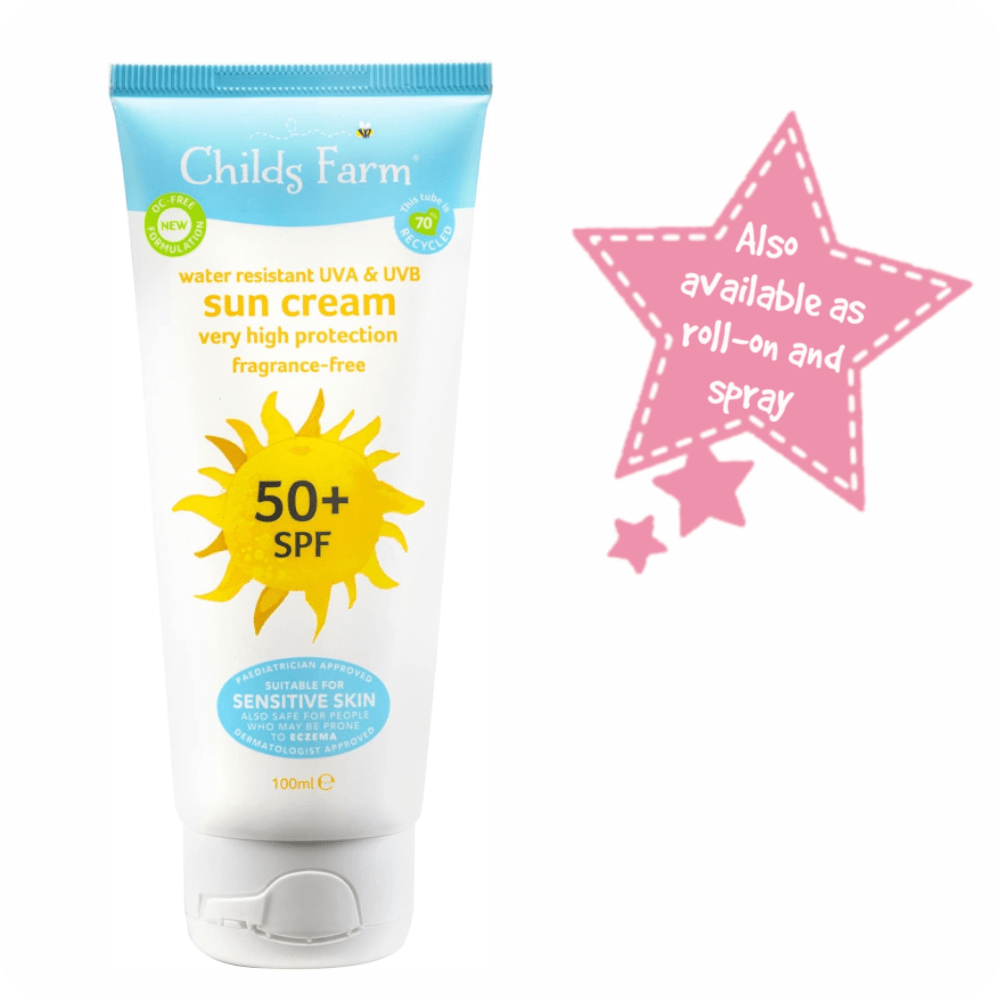
- Chemical sunscreen with good broad spectrum coverage.
- Childs Farm advises reapplying every 1-2 hours. Not ideal for school days, especially if your school asks for sunscreen to be applied before the kids come in.
- Fragrance free but does have quite a strong chemical smell when first applied.
- Quite a runny cream that spreads easily and dries quickly with minimal tackiness. This cream has a noticeable cooling effect as it dries.
- Free from parabens, MCI/MI, phthalates, petrochemicals, lanolin, perfumes and colours. Contains tocopheryl acetate which can cause irritation in some individuals
- RRP: £12.00/100ml
- Amazon rating: 4.6 stars. Order from Amazon here.
We say: Not our testers’ favourite due to the chemical smell on application, but we do like the use of recycled material in the packaging.
Badger Baby Sunscreen Cream SPF30

- One of the few readily available 100% mineral (zinc oxide) sunscreens. Good water resistance and broad spectrum coverage.
- Quite a stiff cream that takes a strong grip to squeeze out of the tube and drags a little on the skin during application.
- No white caste when rubbed in but does leave the skin quite tacky and greasy.
- Not ideal for sandy beaches or dusty environments as sand and dust sticks to tacky skin.
- Comfortingly short and understandable ingredients list but this version contains Calendula essential oils, so probably best avoided if there are known sensitivities in the family. There is a non-scented version.
- RRP £17.18/100ml
- Amazon rating: 4.2 stars. Order from Amazon here.
We say: Not our testers’ favourite due to the claggy feel. But if you’re looking for a 100% mineral sunscreen this brand is a good one to try. Unscented versions are available.
E45 Kids & Baby Sensitive Lotion SPF50+

- Chemical sunscreen with good broad spectrum coverage.
- Manufacturer advises reapplying frequently, so not ideal for school days.
- Quite a runny cream that smooths in easily and dries quickly with no tackiness.
- As you’d expect from the makers of E45, this sunscreen is designed to be moisturising and has added vitamin E to minimise sun damage and reduce inflammation.
- Free from parabens, MCI/MI, phthalates, petrochemicals, lanolin, perfumes and colours. Contains tocopheryl acetate and phenoxyethanol which can cause irritation in some individuals.
- RRP £7.77/100ml
- Amazon rating: 4.7 stars (although most of these were for free product). Order from Amazon here.
We say: Great value for money from a trusted skincare brand. This sunscreen can double as an emollient, so definitely worth trying if you need to apply emollients during the day.
Nivea Protect & Care Sun Lotion 50+SPF

- Water-resistant, chemical sunscreen with moisturisers. Reformulated in late 2023.
- Goes on easily. Quickly absorbed and doesn’t feel claggy or sticky on the skin.
- Fun blue colour ensures complete coverage (the colour does disappear) but maybe best to use the non-water resistant version for very sensitive skin as it doesn’t have this feature.
- Mild ‘sunscreen’ aroma isn’t over powering
- Free from parabens, MCI/MI, phthalates, petrochemicals or lanolin but does contain perfumes and colours. Contains tocopheryl acetate and phenoxyethanol which can cause irritation in some individuals.
- RRP £3.95/100ml
- Amazon rating: 4.7 stars. Order from Amazon here.
We say: Great water-resistant sunscreen, but contains some unnecessary chemicals in the blue colouring and fragrance.
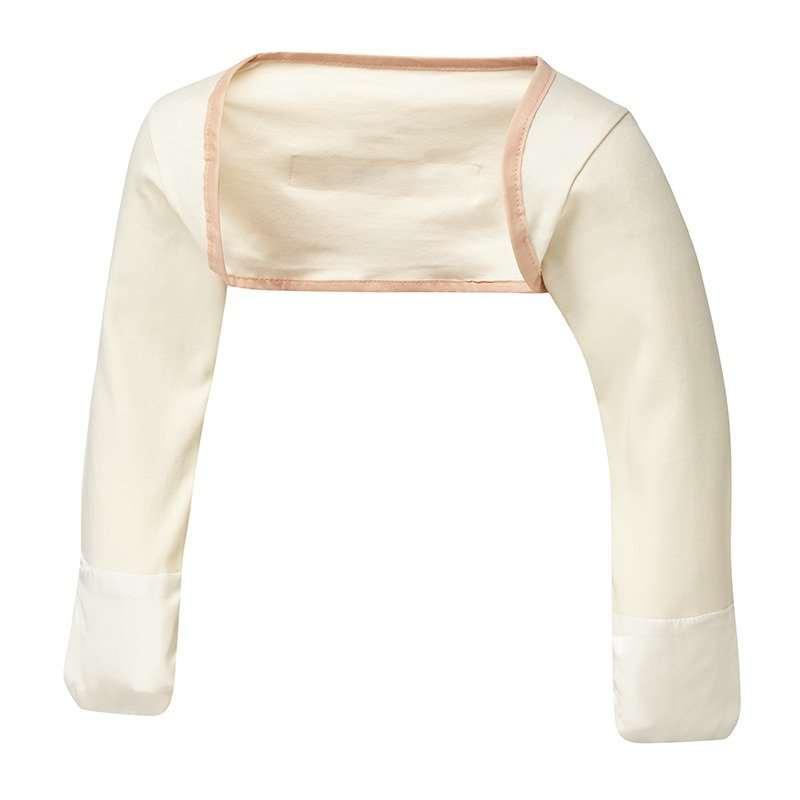
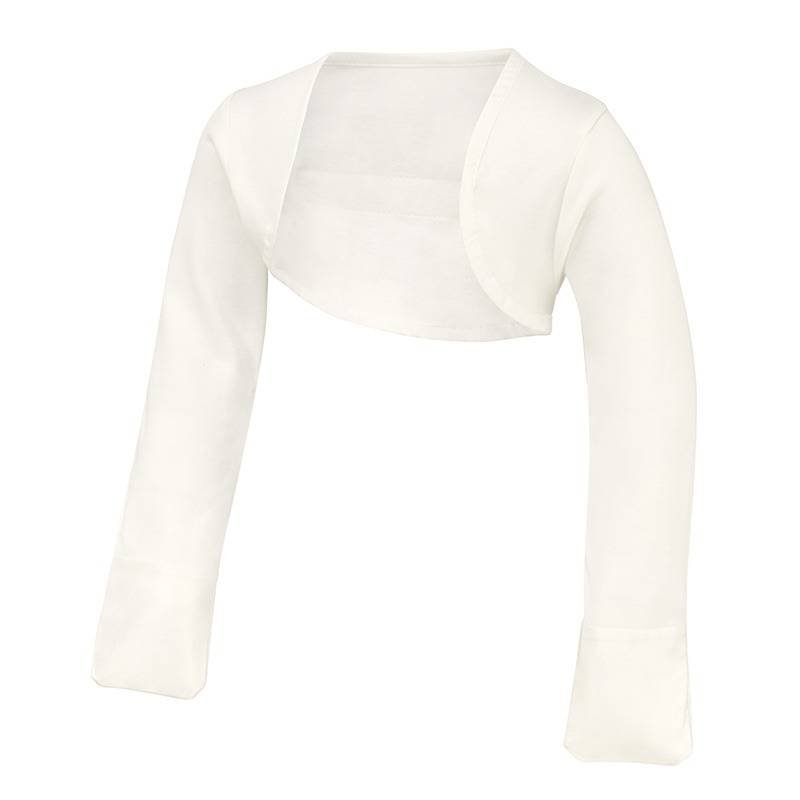
Here at ScratchSleeves, we don’t just share our experiences of bringing up an eczema child and favourite allergy-friendly recipes, we also manufacture and sell our unique stay-on scratch mitts and PJs for itchy babies, toddlers and children. We now stock sizes from 0-adult years in a range of colours. Visit our webshop for more information.